
The future of urban parking in Switzerland
City parking is experiencing a quiet revolution. Between digitalization, space sharing, electrification and new regulations, urban motorists' habits are set to change profoundly in the coming years.
January 15, 2026
The world of Swiss urban parking is in full transformation. Long stuck in traditional patterns, it now integrates technological innovations and new economic models to meet the challenges of sustainable mobility and urban space optimization.
The digital parking revolution
Mobile payment apps have already largely replaced parking meters in most Swiss cities. But the next step goes much further: "smart parking" uses sensors to indicate available spaces in real time, reducing the time spent looking for a parking spot.
Zurich and Geneva are currently testing dynamic guidance systems that direct motorists to the nearest available spaces to their destination. These technologies could reduce traffic related to parking search by 30%, according to initial studies.
Advance space reservation, still marginal today, should become widespread. Several Lausanne public car parks already offer this service via app, guaranteeing an available space upon arrival.
The rise of space sharing
Park-sharing, similar to what Scan-Park offers, is experiencing exponential growth. The principle: connecting owners of unused private spaces with motorists looking for parking.
This model has several advantages. For owners, it's an interesting additional income. For space seekers, rates 30 to 50% lower than traditional car parks. For cities, better use of existing infrastructure without additional construction.
Some large companies are even starting to share their car parks outside business hours, creating a new parking economy.
Electrification and new infrastructure
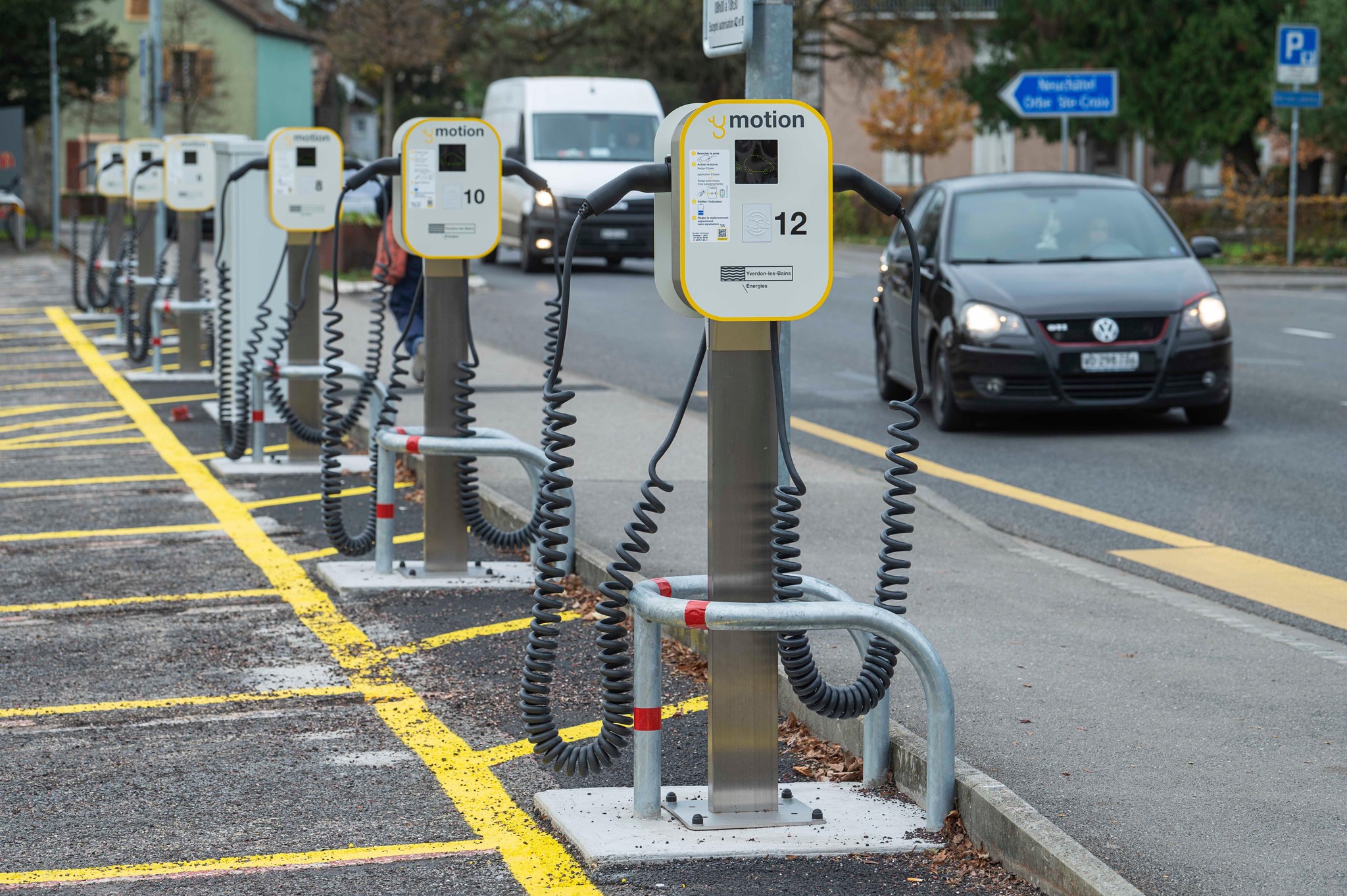
The explosion of electric vehicles radically transforms parking needs. Parking no longer just means stopping, but also charging your vehicle.
New Swiss regulations now require the installation of charging stations in all new car parks. Existing infrastructure is gradually being equipped, with Lausanne setting a target of 500 public charging points by 2027.
This change opens up new opportunities: some car parks already offer preferential rates during charging, transforming parking time into value-added service.
Regulation and dynamic pricing
Swiss cities are experimenting with dynamic pricing, where the price varies according to demand, time and day. Basel has been testing this system since 2025: parking costs less early in the morning or in the evening than midday.
This approach aims to better distribute demand over time and space, while optimizing municipal revenues. Regular users can anticipate and adjust their schedules to benefit from advantageous rates.
Meanwhile, low emission zones (LEZ) multiplying in Switzerland directly influence parking: Zurich and Geneva plan parking restrictions for the most polluting vehicles from 2026.
Reduced supply and new allocations
Paradoxically, while demand remains strong, several cities are voluntarily reducing the number of surface spaces. The objective: reclaim public space for other uses (terraces, greening, cycle paths).
Lausanne removed 200 parking spaces in 2025 in favor of green spaces and street furniture. This trend should accelerate, pushing more motorists towards underground or peripheral car parks.
Automated silo car parks are also beginning to appear, maximizing the use of vertical space. These robotic towers can store two to three times more vehicles than a traditional car park on the same surface.
Towards a multimodal model
The future of urban parking is part of a broader vision of mobility. Multimodal hubs, integrating parking, bicycle rental, electric scooters and connection to public transport, are multiplying.
Parking thus becomes the first or last stage of a journey combining several modes of transport. Digital platforms increasingly integrate these different options into a single application, facilitating the planning of "hybrid" journeys.
This evolution responds to the expectations of an urban population increasingly sensitive to environmental issues and journey time optimization.